When "Just One More Activity" Threatens Your Family's Financial Future
Guilt Is the #1 Enemy of Good Financial Decisions
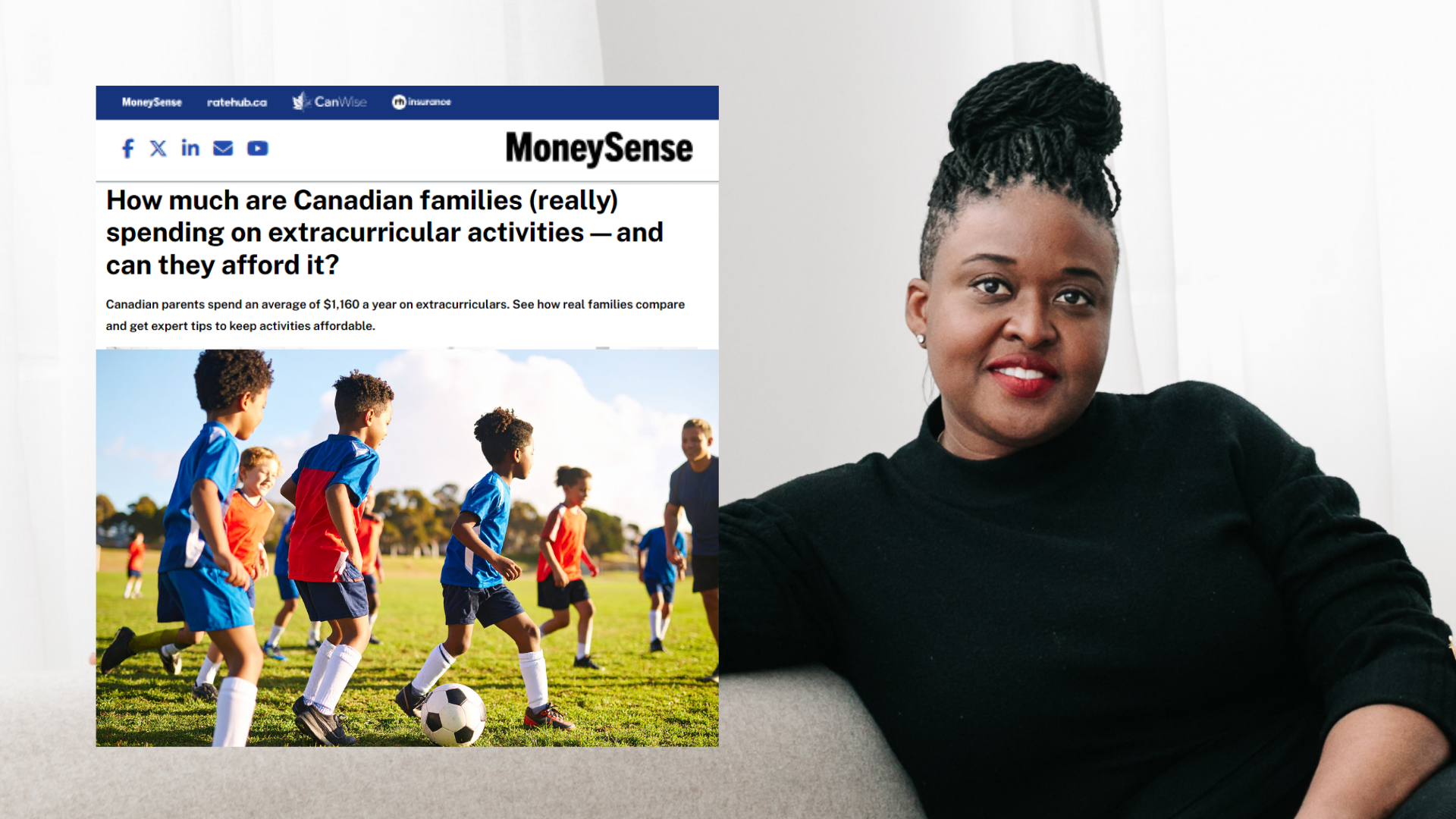
I recently spoke with MoneySense Magazine about budgeting for kids' extracurricular activities, and the conversation kept circling back to something financial advisors rarely talk about: the parents caught between paying for dance recitals and their own parents' care bills.
If you're nodding along, you're not alone. And if you've ever felt guilty saying no to your child's request for elite travel hockey while simultaneously worrying about your mom's retirement security, this one's for you.
The Real Cost of "Keeping Up"
Let's talk numbers that actually matter.
A 7-year-old trying out soccer through your local rec program? Maybe $120 for the season. Totally manageable. But that same kid at 14 on a competitive travel team? Try $3,000-$5,000 annually once you factor in tournament fees, travel, and equipment.
And here's what nobody mentions in those glossy brochures about "investing in your child's future": competitive activities get expensive fast, and they rarely come with ROI unless your kid is genuinely exceptional. That $500 carbon fibre hockey stick isn't going to create the next Sidney Crosby. It's just going to reduce your savings account balance by $500.
The statistics that keep me up at night: 49% of unretired Canadians haven't saved anything for retirement this year. When I work with families spending $10,000+ annually on kids' activities while having zero emergency savings, I know we need a different conversation.
The Two-Phase Approach: Stop Spending Like Every Age Is the Same
Here's the framework that actually works:
Phase 1: Young Kids (Under 12) – Keep It Local, Keep It Varied
The goal at this age isn't excellence—it's exposure.
You're helping them discover what lights them up, not training Olympians. This means:
Budget $500-$1,000 per child annually for 3-4 different activities
Prioritize city-run programs and house leagues ($100-$150 per session)
Borrow or buy used equipment—your 8-year-old will outgrow those skates in six months anyway
Focus on variety over quality—they need to try things, not master them
Real talk: that expensive private skating coach isn't going to make your 6-year-old a better skater than the city's learn-to-skate program. Save your money.
Phase 2: Preteens to 18 – Get Strategic and Selective
This is when costs shift from variety to depth.
Once kids find their passion and show genuine commitment, the investment conversation changes:
Budget $3,000-$5,000+ per child if they're serious and competitive
Recognize the real costs: A competitive dancer needs 5-6 costumes at $350 each. That's $1,750-$2,100 just on costumes.
Equipment gets serious: Hockey sticks are $500. They're not made of wood anymore—they're carbon fibre, and they break.
Travel becomes a factor: Tournaments, competitions, showcases—suddenly you're budgeting hotels and gas
But here's the crucial question most parents skip: Is your child actually committed, or are you more invested than they are?
Seven Ways to Fund Activities Without Breaking Your Family
1. Redirect Gift-Giving
Ask grandparents and family to contribute to activity costs instead of toys. A 14-year-old doesn't need more stuff cluttering their room—they need help funding their passion.
The script: "Instead of birthday gifts this year, would you consider contributing to Emma's dance program? It would mean so much more to her than another toy."
2. Kid Contribution
At 14-15, kids can work. I know families where the teenager became a lifeguard, which helped pay for equipment AND taught them the value of their activities. That's a money lesson you can't buy.
3. Buy Secondhand or Discounted
Facebook Marketplace for equipment
Play It Again Sports for hockey/baseball gear
End-of-season sales (30-50% off)
Activity swap bins at schools/studios where parents can sell outgrown items
That $500 hockey stick? You can find last year's model for $150.
4. Set Clear Boundaries
Some activities are way more expensive AND time-consuming than others. Try this framework:
"You can pick two activities, but they can't both be very expensive and very time-consuming, or you won't have time for school."
This teaches prioritization and resource management—skills worth more than any trophy.
5. Distinguish Between Exploration and Investment
Younger kids trying new things every three months? Keep it cheap—that's exploration. Older kids showing consistent commitment? That's when investment spending makes sense.
6. Question "Better" Leagues
Unless your kid is genuinely elite, expensive doesn't always equal better. I've seen families pay thousands for their child to sit the bench in a "higher" league when they could be playing—and having fun—in a more appropriate tier.
The question to ask: "Is this league better for my child's development and enjoyment, or just better for my ego?"
7. Build It Into Your Bridge System™
In my financial framework, activity spending comes from your Freedom Bridge or Legacy Bridge (depending on your family structure). It's planned spending, not surprise spending.
When a request comes in, you're not scrambling to figure out where the money comes from—you already know. And when the answer is no, it's not emotional; it's factual: "That's not in our activity budget this term."
The Conversation Nobody's Having: When You're Supporting Two Generations
Here's where this gets real for first-generation professionals and sandwich generation families.
When you're potentially contributing $2,000-$3,000/month to a parent's long-term care costs while also managing kids' activities, household expenses, and trying to save for your own retirement, that $500 hockey stick becomes a much bigger decision.
The reality check: 1.8 million Canadians are sandwich caregivers, supporting both children and aging parents simultaneously. 70% worry about the financial strain of supporting both generations.
If this is you, the conversation with your kids needs to include this reality:
"We make good money, but we also support Grandma. That means we have to make strategic choices about where our money goes."
Your kids can handle this truth. In fact, they should. This teaches them about generational responsibility, financial trade-offs, and family values—lessons worth far more than any competitive league.
When Saying No Is Actually the Right Answer
There are three clear situations where no is the right answer:
1. When it doesn't fit your family's financial reality
Not every activity request aligns with what your family can afford. Teaching kids that financial decisions involve trade-offs is valuable.
2. When the child isn't truly committed
If your kid wants to try something new every three months, that's exploration—keep it cheap. But if they want you to invest $5,000 in competitive gymnastics and they're already talking about quitting piano and dance? That's a conversation about commitment before you open your wallet.
3. When "better" doesn't actually mean better for your child
Sometimes staying in a league where they actually play—and have fun—beats paying thousands for them to sit the bench in a "higher" league.
The Reframe That Changes Everything
Saying no to an expensive activity isn't depriving your child—it's teaching them financial wisdom.
Kids whose parents are financially stressed because they're overextended on activities can feel that stress. Financial peace at home is more valuable than another tournament.
And here's what I tell parents drowning in guilt: Your job isn't to say yes to every activity—it's to raise financially literate kids who understand that resources are finite and choices matter.
The parent who says yes to everything while drowning in debt and stress isn't actually giving their kids a gift.
The better gift? Modeling healthy financial boundaries. Showing them how to make intentional choices. Teaching them that wanting something doesn't mean you automatically get it—and that's not deprivation, that's life.
Making It Work: Your Action Plan
For families with young kids (under 12):
Budget $500-$1,000 per child annually
Prioritize local, city-run programs
Buy used equipment or borrow
Focus on variety and exposure
Don't invest heavily until commitment is clear
For families with older kids (12-18):
Budget $3,000-$5,000+ if child is committed and competitive
Get creative with funding: redirect gifts, kid contribution, secondhand shopping
Set clear boundaries on number and type of activities
Question whether "better" leagues are actually better for YOUR child
Build activity spending into your financial system
For sandwich generation families:
Have honest conversations with kids about supporting multiple generations
Use the Bridge System™ to allocate money intentionally across priorities
Remember that saying no to activities doesn't mean you're failing—it means you're being realistic about your family's full financial picture
The Bottom Line
Extracurricular activities should enrich your children's lives, not bankrupt your family or rob them of financial security in adulthood.
The goal isn't perfection. It's intention.
It's making conscious choices about where your money goes instead of letting guilt, social pressure, or the myth of "investing in your child's future" drive every decision.
Because here's what I know after years of helping families navigate these decisions: The kids who learn that resources are finite, choices matter, and family comes before trophies? Those are the kids who grow into financially healthy adults.
And that's worth more than any competitive league can offer.
Want to learn more about building a financial system that works for families navigating multiple generations of support? Check out my Bridge System™ Spending Plan designed specifically for first-generation professionals who refuse to choose between family obligations and financial freedom.
Enjoyed this? The newsletter goes deeper every week — insights on investing and money written for first-gen professionals. [Join here →]